
Brief
A university in Loughborough, England, will use a $700,000 grant from the Wolfson Foundation to create a world-first slope simulator to better understand often deadly landslides and earthwork failures. The plan is to build a tilting table to hold large-scale slopes that will be successively wetted and dried to simulate slope deterioration over time.
Insight
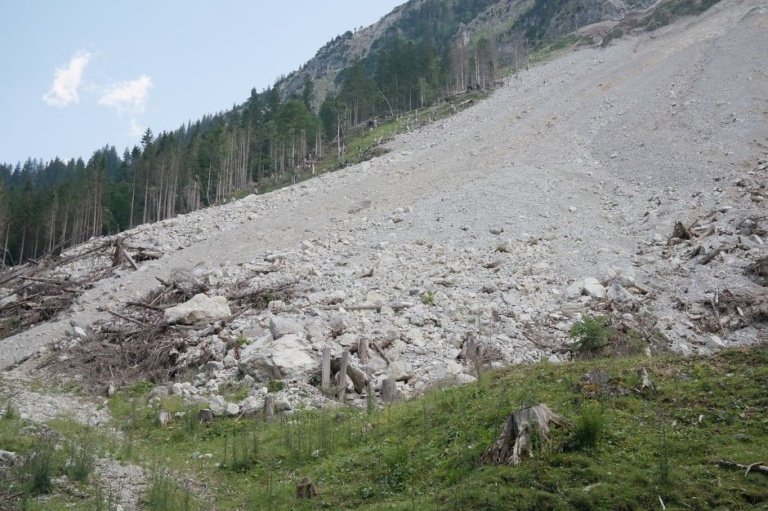
Worldwide, landslides caused by earthquakes and heavy rainfall kill thousands of people annually. They also damage infrastructure and disrupt access to lifelines such as water supplies and transport links.
Despite the devasting consequences of earthwork failures there is limited understanding of why and when they occur. According to Loughborough University, there is currently no capability anywhere in the world to undertake simulations that would provide this information.
Chinook helicopter joins Whaley Bridge dam operation
Now, the University has received a £500,000 grant from the Wolfson Foundation to create a simulator aimed at transforming national and international research capacity in this field.“This is one of the most intriguing and important grants awarded this funding round,” said Paul Ramsbottom, chief executive of the Wolfson Foundation. “It is based around brilliant science and will be one of the only facilities of its kind – not just in the UK but beyond.”
Large-scale slopes will be constructed on a tilting table and subjected to cycles of controlled wetting and drying to simulate seasonal weather conditions. The table will be tilted and held at specified angles during this process, creating slope deterioration. Continuous monitoring, followed by rotating the slope to failure, will provide unique information on the impact of different weather patterns and extremes.
READ MORE


Recent Comments