
Brief
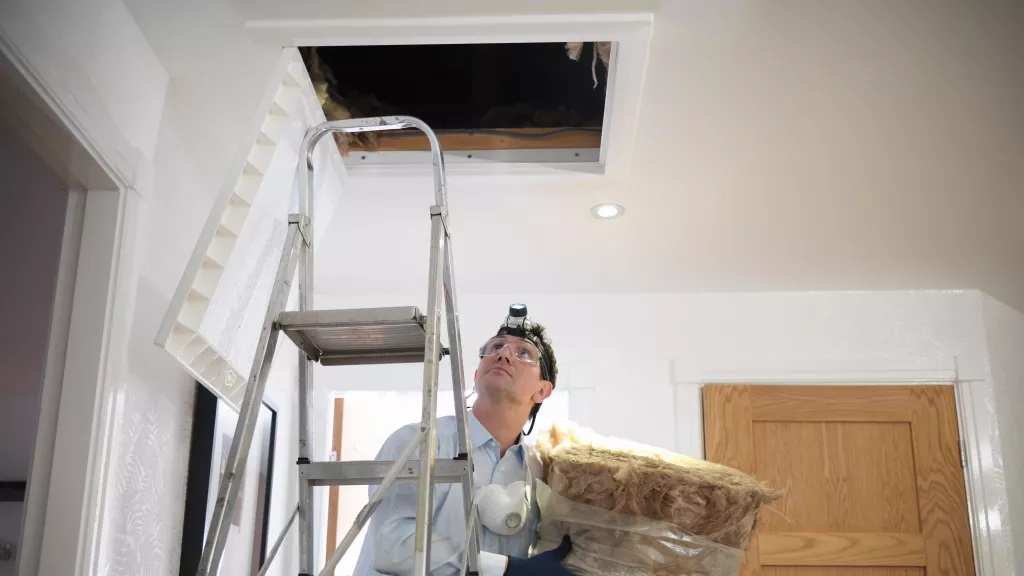
Insulating a loft hatch is a simple, cost-effective DIY task which could help prevent heat loss, draughts and condensation. Here’s what you need to know first.
Insight
heat loss in your home. And, if you are insulating your loft, it makes sense to address this area at the same time.
Here, we explain why it’s a good idea to insulate a loft hatch, how to undertake this DIY task, how much it will cost, as well as the options available to those building a new home or replacing an existing loft hatch.
How Much Energy is Lost Through a Loft Hatch?
How much energy is lost through an uninsulated loft hatch all depends on the size of the hatch, and importantly, how the loft itself is insulated.
If the loft is insulated at the roof rafter level then an uninsulated loft hatch will have little or no, effect. If the insulation is at the ceiling joist level then an uninsulated hatch will have a significant impact.
That said, even then the measurable energy loss is unlikely to break the bank. A 500mm x 500mm loft hatch could lose up to 40kWh/year. Add in the draughts around the hatch’s edge and the cold-bridge effect this creates, and that figure could reach 60kWh/year (varying with how draughty the loft is).
Even in these days of energy price rises that is still only worth around £3.50 per year. So it could be argued that energy loss alone does not warrant spending a lot on insulation.
However, the better the insulation and draught proofing to the rest of the house the greater the impact of an uninsulated hatch.
Should I Insulate the Loft Hatch in My Home?
In an existing home, if the loft insulation is at the ceiling level, then it’s particularly important to insulate the hatch as well to prevent heat from escaping. It does not save a lot of money or CO2, but it is a quick, cheap, easy job.
READ MORE



Recent Comments