
Brief
A new study has assessed the value of concrete made with crumb rubber from discarded tires by using it as a residential slab and monitoring its performance over several years, where it outshone conventional concrete in a number of ways.
Insight
With a notoriously large carbon footprint, concrete is a prime target for researchers developing greener materials for the future of construction. A number of studies have shown how old rubber tires can be used to make versions that are stronger, more heat-resistant and flexible enough for use as a road material.
A new study has assessed its value in real-world settings by using concrete containing old tires as a residential slab and monitoring its performance over several years, where it outshone conventional concrete in a number of ways.
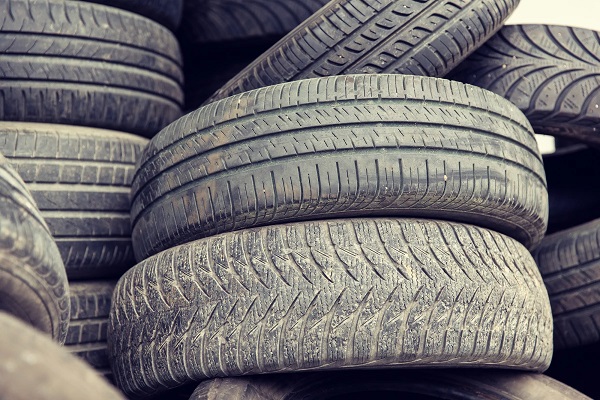
The type of concrete at the center of this study is known as crumb rubber concrete, and its production involves grinding rubber tire down into crumbs of a similar consistency to sand.
These crumbs can then be used to replace a certain proportion of the sand typically mixed in with the cement, water and other ingredients to form concrete, lessening the reliance on the natural material and giving the discarded rubber a second life.
Scientists at the University of South Australia and Melbourne’s RMIT University have sought to take this material from the “lab to the slab,” noting that while it has shown a lot of promise in laboratory testing, its reliability in real-world construction requires further exploration.
To investigate its practical application in residential settings, the scientists poured two crumb rubber-reinforced concrete slabs at the University of South Australia campus in 2018, along with two conventional concrete slabs. These formed the entrances to a civil engineering laboratory that sees a lot of foot traffic, with the team closely monitoring the materials’ performance over time.
READ MORE


Recent Comments