
Brief
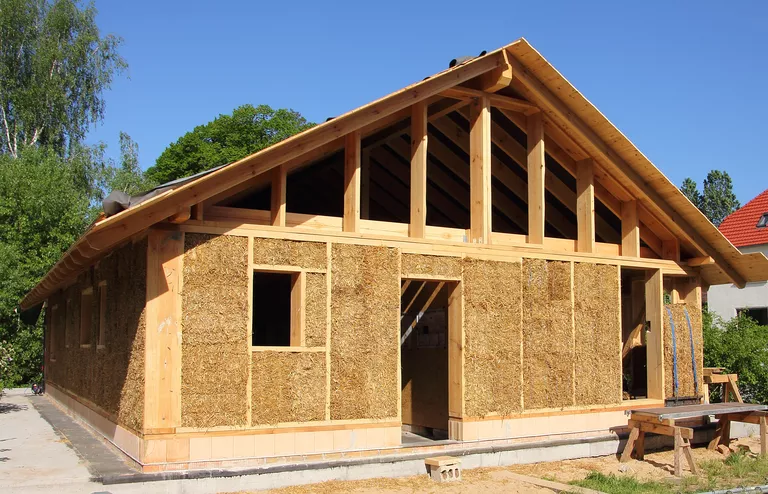
A straw bale house is made using straw as either a main structural element, insulation, or both. The buildings are constructed by stacking rows of compact straw bales on a strong foundation before sealing with a moisture barrier and outer plaster layer. They typically have extremely thick walls with efficient thermal mass for low energy bills and year-round comfort.
Insight
Straw bale houses are relatively rare, but the practice is picking up steam thanks to the growing sustainable design trends.
Straw is cheap (sometimes free) and the entire process reduces construction waste that can have a negative impact on the environment; any excess straw or natural plaster can, in theory, be used on site in compost or as ground cover to protect the soil.
One paper found that straw bale buildings save 40% of construction costs when compared to traditional homes.
What Is a Straw Bale House
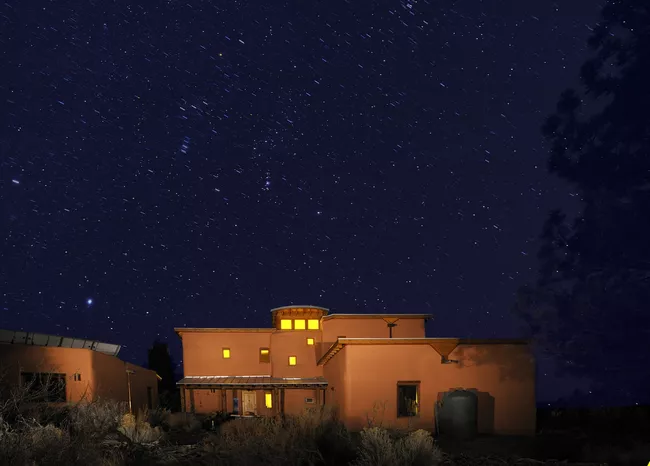
Straw is an agricultural byproduct that comes from growing cereal grains like wheat, oats, and rice—the straw itself is made up of the dry stalks of the cereal plants after the grain has been removed. It’s been used for thousands of years as a building material for reinforcing clay or mud structures as an inexpensive, renewable resource with good insulating value.
The modern practice of straw bale building originated in Nebraska during the late 19th century, when early settlers were looking for the quickest method for temporary housing (although, straw and reeds were used as building materials in thatch roofing throughout the Middle East for thousands of years before that).
Unsurprisingly, the construction method directly followed the invention of the steam bale engine, which collected and packed straw into the tight, brick-like bales we see today.
Straw Construction Regulations
Whether or not your state has a building code for straw bale construction depends on the region. Those planning to build a straw bale home will want to research the code book for their particular state and check in the alternative building section as well as any local or state addendums.



Recent Comments