
Brief
Australian chemical company EcoMag is working to turn Australia’s carbon footprint into homes and office buildings, with scientists producing plasterboard from waste.
Insight
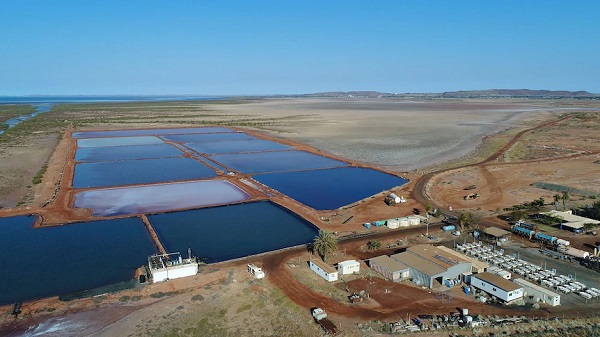
EcoMag utilises the waste from the Pilbara’s salt industry to extract magnesium for use in industrial, environmental and pharmaceutical applications.
The company is now working with the University of New South Wales (UNSW) School of Chemical Engineering to turn that magnesium, alongside carbon sequestered from Pilbara’s nearby resources industry, and agricultural waste such as pine and straw, into plasterboard for the construction industry.
EcoMag chief executive Tony Crimmins said offsetting carbon emissions was going to be a key part of Australia’s future.”We believe that the future of all products that are made will be governed by the carbon footprint.
“And if we can actually make the products that have low carbon footprints using our materials, we’re opening up markets that are future-protected for CO2 generation.
So simple, it was overlooked
While sequestering carbon into plasterboard using three different waste streams might seem complicated, UNSW associate professor, Jason Scott, said it was such a simple process, he asked himself regularly why it had never been done before.
“Sometimes we overlook that simplest is often the best, and the reality is that simplest is probably best in terms of producing a commercial product,” he said.
“It’s such a simple process and it’s an easy way to capture and value add to say, carbon dioxide emissions, using multiple waste streams – not only CO2 but your waste bitterns stream, and if we integrate it in with some form of agri-waste then you’ve got a third waste stream.
“I think that is actually something which is quite unique to the process that we’re looking at developing.”
READ MOE




Recent Comments