
Brief
High-rise construction in the Middle East depends heavily on efficient planning to ensure ready-mixed concrete is preserved at an optimal temperature, says Abdo Kardous, president of Hill International Middle East. Crews must also adjust to pumping challenges with vertical construction, Kardous adds.
Insight
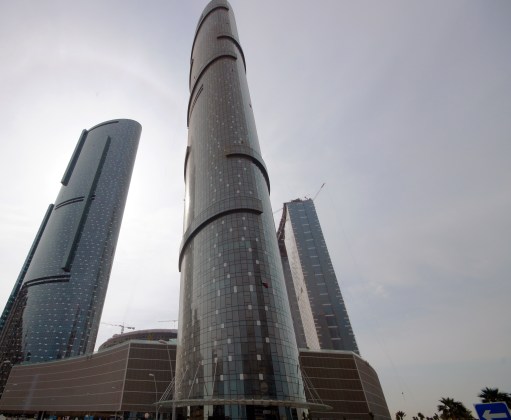
Led by cities like Dubai, the Middle East has seen an enormous growth in large scale construction projects over the last twenty years, particularly in the realm of skyscrapers. Iconic structures such as the Burj Khalifa in Dubai and the Ethiad Towers in Abu Dhabi have become synonymous with the vertical expansion of Middle Eastern skylines.
Abdo Kardous, President of Hill International Middle East, says the increase in tall building projects in the area is a result of two factors: population growth and wealth gained from oil. In recent decades, several cities in the region have exploded in population, particularly in the United Arab Emirates (UAE). In 2000, Dubai was home to less than 900,000 people; today, Dubai is home to more than 3.3 million people.
Kardous also points out that, unlike in places like the United States and China, there is little to no developed rural land surrounding these cities. Whereas in China, the US, and other similar countries populations migrate from rural areas for work, the working population of many Middle Eastern cities is located within the city itself. This places an even greater emphasis on housing development within the larger cities, which is a viable use for high rise structures in urban areas.
Combined with capital from the oil industry, population growth is fueling an expansion of real estate investment within the region. This influx of real estate development is further influenced by the availability of buildable land, the lack of which has driven the price of land steadily upward. According to Kardous, this has caused developers to develop their properties vertically to maximize the available space.
In addition, thin, vertical structures are a viable option because there are little to no seismic considerations that have to be made. Even in the areas where there is seismic activity, it is to a much lesser degree than areas such as the West Coast of the United States. Kardous also believes there is another aspect coming into play that is fueling vertical expansion beyond what the economic factors dictate–prestige.
READ MORE


Recent Comments