
Brief
Extracting materials is wreaking havoc on the planet. Could the world’s growing mounds of waste hold the key to sustainable construction?
Insight
We now smash, grab and pull some 100 billion tonnes of raw material out of the fabric of the planet in just a single year. That’s equivalent to destroying two-thirds of the mass of Mount Everest every 12 months.
Roughly half of the raw materials we extract go into the world’s built environment. Construction creates an estimated third of the world’s overall waste, and at least 40% of the world’s carbon dioxide emissions. Compare that to the 2-3% caused by aviation, which people fret far more about.
The “waste” from the consumption of these raw materials is dumped in such vast quantities that its environmental imprint has helped to create a new epoch, dubbed the Anthropocene. Future archaeologists will dig through strata of manufactured detritus to discern how we lived.
But this stuff that we make and discard today also contains a treasure trove of materials we could be using to our benefit. It’s been calculated that one tonne of mobile phones contains 300 times more gold than a tonne of the best quality gold ore, as well as significant quantities of silver, platinum, palladium and rare earths – all things we scar the earth to get more of by ongoing mining.
The vast quantities of copper inside billions of cables worldwide is a far more concentrated source of reusable metal than the less than 1% in top-grade ore.
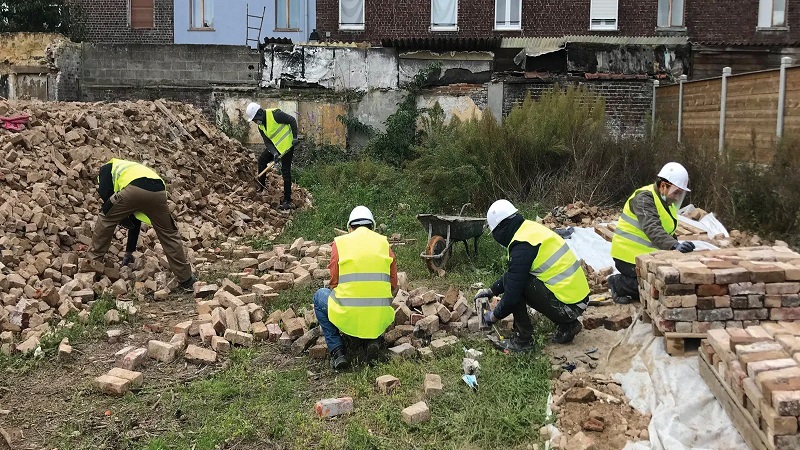
This all gives rise to an obvious question – why don’t we re-use what we’ve already extracted, rather than gouging the planet for ever more raw materials? This thought has spurred a growing band of architects and building firms to look at how to re-use the huge range of materials already hiding within our built environment, from concrete and wood to the metallic bounty within electronic waste.
READ MORE


Recent Comments