

Sound Transit’s Blue Line trains won’t travel across Interstate 90 from Seattle to Bellevue until 2023, but the effort to engineer how light rail will make the trip across a floating bridge — for the first time ever, anywhere — has been ongoing for years.
And now crews are starting installation of that trickiest part of the endeavor, laying the “track bridges” to transition light rail vehicles onto the floating bridge.The specialized track attachments will minimize weight and isolate stray current from the electric system that powers the trains.
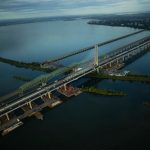
While the process of installing rail on the floating bridge has been underway for a year already, the planning and preparation was several years in the making before then. Last summer crews completed post-tensioning of the bridge pontoons, a process that reinforced the concrete and high-strength tensioned strands on the Homer M. Hadley floating bridge, the world’s second-longest floating bridge (the world’s largest is just a few miles away).
Almost 9,000 specially engineered and constructed lightweight concrete blocks are getting affixed to the bridge deck using a specialized epoxy called DexG. Rail gets set on the blocks, with steel tie bars placed between them to maintain gauge, similar to standard railroad tie systems. Features of the concrete blocks also isolate stray current that could damage bridge structures.


Recent Comments