

Brief
Explore how structural health monitoring can safeguard ageing bridges and improve public safety with smart, data-driven solutions.
Insight
As urban infrastructure ages, the need for proactive and intelligent maintenance strategies becomes increasingly urgent. One powerful solution lies in implementing a bridge structural health monitoring system—a technology that offers real-time insights into the condition and performance of critical structures.
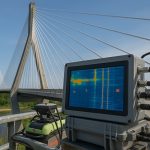
Rather than depending solely on periodic visual inspections, these systems use a network of sensors, data loggers, and analytics to continuously measure variables such as stress, vibration, displacement, temperature, and corrosion.
This method not only enhances the accuracy of diagnostics but also allows for timely interventions that can significantly extend a bridge’s service life.
A compelling case involves a monitored bridge whose fatigue life was re-evaluated from five years to over 50 years, ultimately avoiding costly restoration works. Such results demonstrate how bridge structural health monitoring systems support evidence-based decision-making, reducing risk and expense.
Notably, the Jacques Cartier Bridge in Montreal stands as a benchmark for this approach. Outfitted with over 300 sensors, it utilises acoustic emission tools, long-term instrumentation, and satellite radar to track real-time structural changes. These tools work in harmony to detect early-stage issues and deliver actionable insights. This example illustrates how older bridges can remain both safe and functional through strategic investment in monitoring technology.
Brisbane’s Story Bridge, currently facing structural issues, could greatly benefit from this modern approach. With more than 100,000 daily users and a rich architectural legacy, its preservation is not only a matter of safety but also of civic pride. By adopting a comprehensive monitoring system, Brisbane City Council can ensure timely maintenance, prevent failures, and set a global precedent for managing ageing infrastructure.
As urban populations grow and climate change intensifies, scalable monitoring systems—whether simple or AI-integrated—will play an essential role in protecting both lives and legacy assets. Investing in bridge structural health monitoring systems is no longer optional; it is a necessity for future-proofing our transport networks.
Highlight
- Rather than depending solely on periodic visual inspections, these systems use a network of sensors, data loggers, and analytics to continuously measure variables such as stress, vibration, displacement, temperature, and corrosion.
- This method not only enhances the accuracy of diagnostics but also allows for timely interventions that can significantly extend a bridge’s service life.
- A compelling case involves a monitored bridge whose fatigue life was re-evaluated from five years to over 50 years, ultimately avoiding costly restoration works.
Satellite View
READ MORE
Related Questions:
- What is structural health monitoring system in bridges?
- What is a structural health monitoring system?
- What are the benefits of SHM?
- What are the techniques used in bridge monitoring?
Related Podcasts;
“Bridge structural health monitoring system”
Related Publications:


Recent Comments