
Drivers over the Penobscot Narrows Bridge are likely unaware there’s a small laboratory within the bridge where University of Maine faculty and students, in cooperation with the Maine Department of Transportation, have set up shop.
Using measurement tools like fiber-optic strain sensors and temperature sensors, the group is monitoring six high-strength, non-corrosive carbon fiber composite strands used in select spots on the structure, which otherwise employs conventional steel strands to hold up the bridge.
The goal is to see how well the carbon fiber strands perform. The idea is that composites, inherently non-corrosive, could provide better longevity than steel, ultimately saving cost.The study is one of a number of projects being carried out by the Transportation Infrastructure Durability Center, a collaboration of New England universities led by the University of Maine.
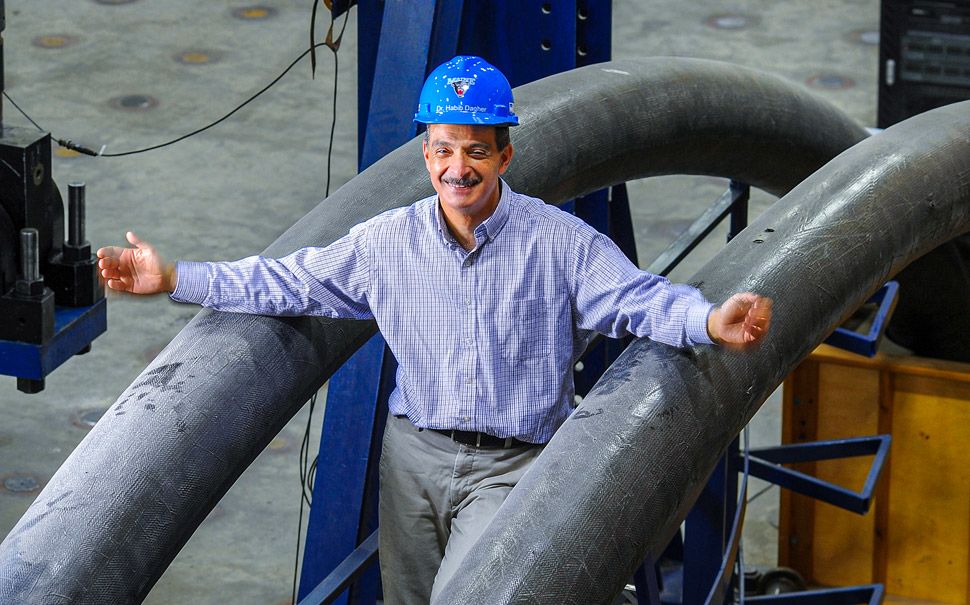
It seeks to identify new materials and technologies that maximize transportation infrastructure investment.There are hundreds of thousands of bridges and roads in need of repair,” says the leader of the program, Habib Dagher, a professor of civil and structural engineering at the University of Maine. “The DOTs are scraping for money just to keep things rolling.”
READ MORE


Recent Comments