
Brief
Explore offshore breakwater construction using concrete caissons, deep foundations, and advanced marine engineering techniques.
Insight
Offshore breakwater construction represents one of the most complex and technically demanding areas of modern civil engineering, particularly when executed in deep marine environments. The use of concrete caisson systems has become a proven solution for delivering large-scale coastal protection structures capable of withstanding extreme wave forces, deep-water pressures, and long-term environmental exposure.
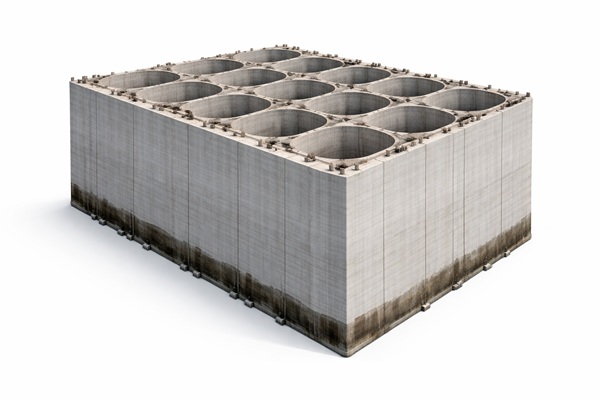
In advanced marine infrastructure projects, offshore breakwater construction often involves placing massive reinforced concrete caissons at depths reaching up to 50 metres. These caissons, which can exceed 30 metres in height and 60 metres in length, are designed as cellular structures. Once positioned, their internal voids are filled with dredged material or rock to provide stability, weight, and resistance against sliding and overturning. This method ensures a durable and adaptable structural system suitable for harsh offshore conditions.
A critical phase in offshore breakwater construction is seabed preparation. Techniques such as vibroflotation are used to install stone columns and improve ground stability. These columns, combined with gravel blankets and foundation berms, create a level and reinforced base for accurate caisson placement. Precision is essential, as even minor deviations can affect long-term performance and structural integrity.
The fabrication of each concrete caisson typically involves slipforming techniques carried out on floating platforms or barges. This approach allows continuous vertical casting while maintaining structural uniformity. The use of durable cementitious materials, such as blended cement systems, enhances resistance to chloride ingress, sulphate attack, and long-term deterioration—key considerations in marine environments.
Another important aspect of offshore breakwater construction is environmental and operational efficiency. Modern projects incorporate recycled materials, such as crushed concrete from demolished structures, and prioritise marine-based logistics to reduce transport emissions. In addition, advanced monitoring systems using sensors, satellites, and geotechnical instrumentation provide real-time data on settlement, pore pressure, and structural movement. These systems are essential for ensuring safety, performance, and compliance throughout the construction lifecycle.
The integration of hydraulic modelling and vessel navigation simulations further optimises breakwater design. These analyses help determine the ideal layout, entrance widths, and wave dissipation performance, ensuring safe navigation for large vessels while enhancing port capacity.
Overall, offshore breakwater construction continues to evolve through innovation in materials, fabrication methods, and monitoring technologies. The use of large-scale concrete caisson systems remains central to delivering resilient, sustainable, and high-performance marine infrastructure.
Highlight
- These caissons, which can exceed 30 metres in height and 60 metres in length, are designed as cellular structures. Once positioned, their internal voids are filled with dredged material or rock to provide stability, weight, and resistance against sliding and overturning.
- A critical phase in offshore breakwater construction is seabed preparation. Techniques such as vibroflotation are used to install stone columns and improve ground stability.
- These columns, combined with gravel blankets and foundation berms, create a level and reinforced base for accurate caisson placement.
Satellite View
READ MORE
Related Questions:
- What is a caisson breakwater?
- What are the 4 types of caissons?
- What is a concrete caisson?
- What are the three types of breakwaters?
Related Podcasts:
Related Publications:



Recent Comments